 Financial Investment


 Tiếng Việt
FiinGroup CEO: AI Investment Should Start with Value for Customers and the Business
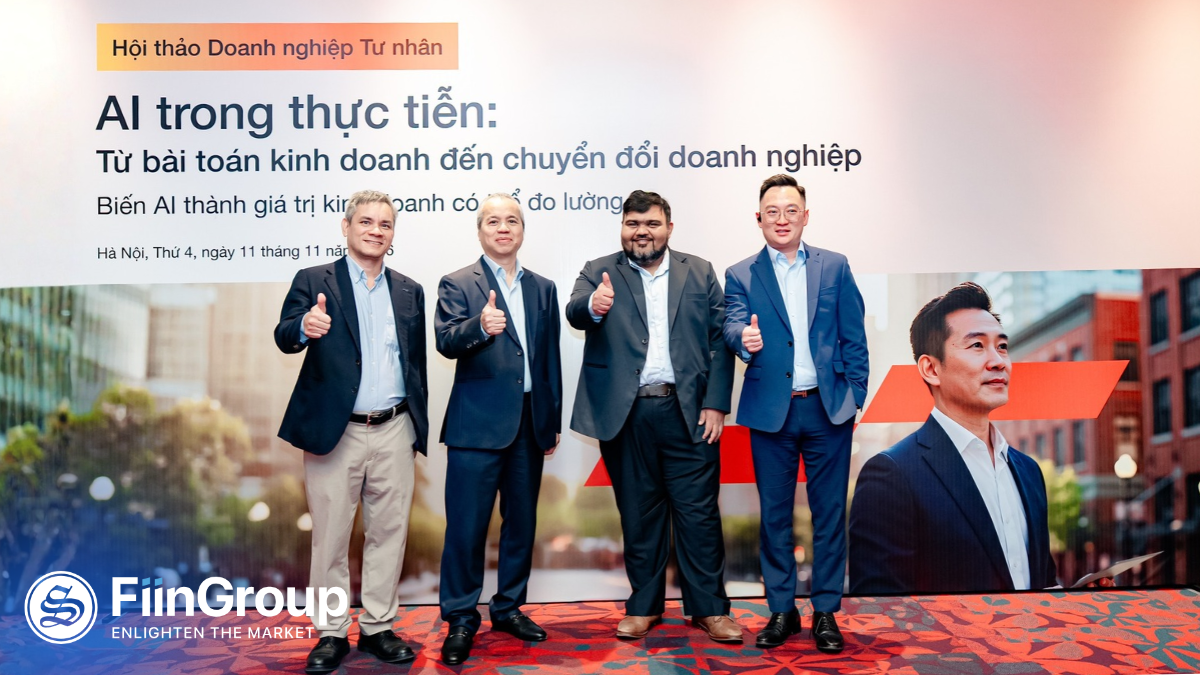
On 11 November 2026, PwC Vietnam hosted the seminar“AI in Practice: From Business Challenges to Enterprise Transformation” in Hanoi. According to PwC’s 29th Global CEO Survey, 39% of CEOs in Asia Pacific reported that AI had increased revenue. Yet translating AI pilots into financial benefits remains a challenge for many businesses. The seminar explored what it takes to deploy AI at scale and the decisions leaders need to make.
Joining the panel discussion, Mr. Nguyen Huu Hieu, CEO of FiinGroup, shared the perspective of a provider of analytics infrastructure and data technology pursuing an AI-first approach. In his view, an AI initiative should be measured by its impact on customers and the business. Delivering that impact requires reliable data, appropriate processes and clear accountability for AI-supported outcomes.
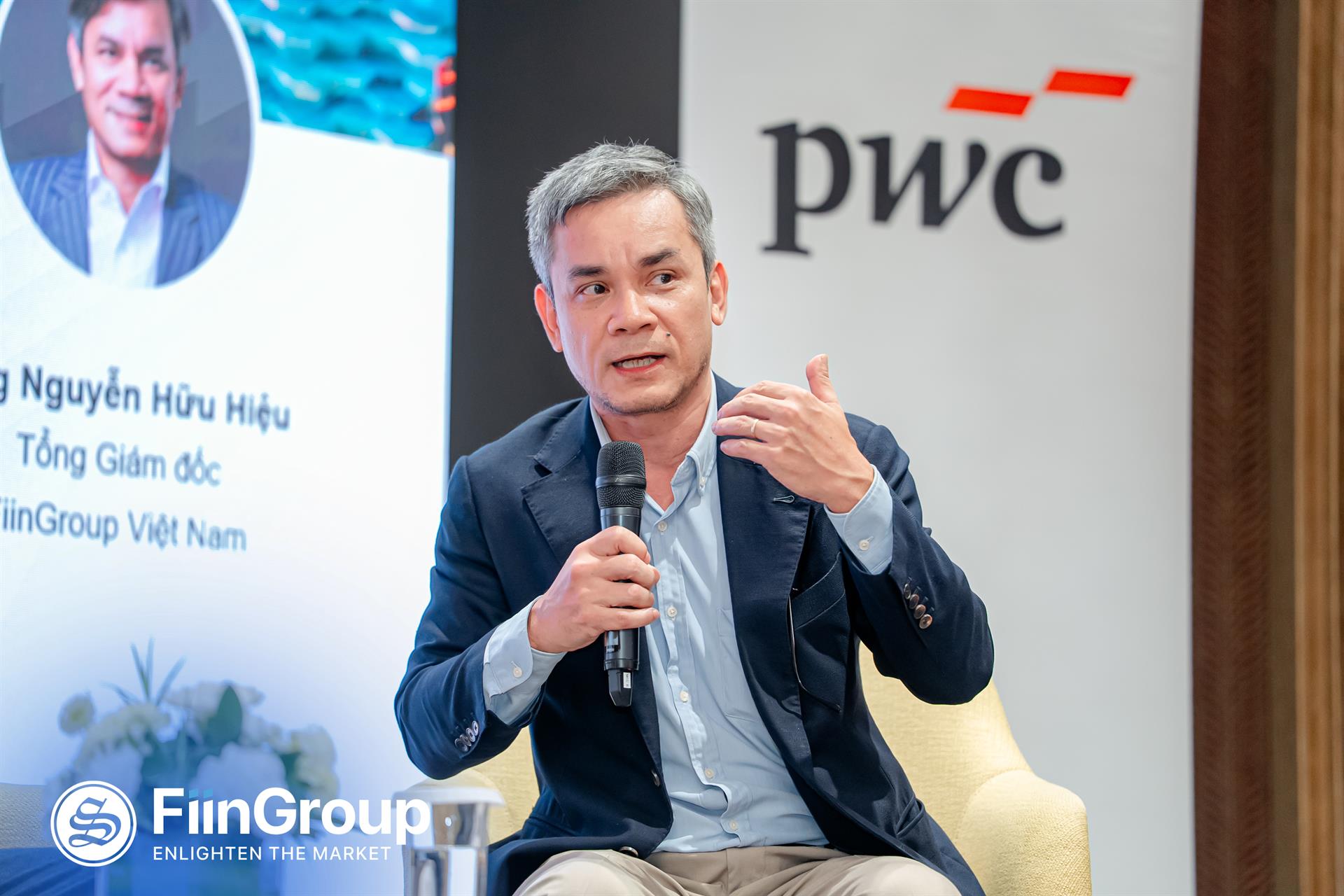
Mr. Nguyen Huu Hieu, CEO of FiinGroup, joined the panel discussion.
AI Adoption Should Begin with the Intended Outcomes
Mr. Hieu suggested that, rather than starting with “What can AI do?”, businesses should first identify the value they want to create for customers and their operations: “What benefits do we want to deliver for customers and the business, and can AI help us deliver them more effectively?”
Under this approach, AI initiatives are prioritised according to the outcomes they can deliver, rather than the sophistication of the technology or the number of successful pilots. These outcomes may include higher revenue, lower operating costs, more accurate decisions, faster service delivery or the ability to meet previously unaddressed needs.
Two Approaches to AI: Operational AI and Strategic AI
Once the intended outcomes are clear, businesses need to determine how AI can help achieve them. Mr. Hieu distinguished between two approaches: improving the efficiency of existing activities and developing capabilities that were previously unavailable. Each creates value in its own way, and the two can complement each other.
The first approach, operational AI, enables existing tasks:AI enables existing tasks to be completed faster, more accurately or with fewer resources. For example, it can help businesses process large volumes of data and information, reduce time spent on repetitive manual tasks and lower operating costs. This allows processing capacity to scale without a corresponding increase in staffing. To turn productivity gains into business value, companies need to decide how to use the capacity freed up: serving more customers, improving service quality or handling larger workloads.
The second approach, strategic AI, helps businesses: AI helps businesses develop new capabilities, from redesigning customer experiences to creating new products, services and revenue streams. The focus is on expanding how the business creates value and addressing needs it could not previously serve effectively.
According to Mr. Hieu, not every AI initiative needs to create a new business model. Operational improvements can already deliver tangible value through cost savings or better customer service. Business leaders need to define the value expected from each approach and how results will be measured in practice.

Mr. Nguyen Huu Hieu and fellow speakers during the seminar’s panel discussion.
AI-Ready Data: A Foundation for Effective AI Deployment
Whichever approach a business takes, AI depends on data of sufficient quality: data prepared for direct use by AI in an effective, reliable and verifiable way. This requires more than digitisation. Data must be trustworthy, well governed, accessed appropriately and grounded in business context. At scale, incomplete, inconsistent or fragmented data undermines the quality of analysis and the decisions based on it.
Mr. Hieu emphasised that translating data into business outcomes requires industry expertise, appropriate processes and clearly defined use cases.
Four Questions to Ask Before Investing in an AI Initiative
Mr. Hieu brought these considerations together in four questions leaders should answer before committing to an AI initiative:
What specific impact should this initiative deliver for customers or the business?
Is AI the most effective way to achieve that impact?
Are the data, processes and accountable business owners ready?
What evidence and performance indicators are needed before committing further investment or scaling deployment?
The final question informs how funding is allocated. For initiatives involving significant uncertainty, businesses can release funding in stages. Each stage tests a critical assumption and provides evidence for the next decision: continue, adjust or stop. Capital is therefore allocated according to demonstrated impact and what the business learns at each step.
According to Mr. Hieu, this sequence should guide AI investment decisions. Businesses should first define the impact they want to achieve, then select the technology, prepare the data and assign accountability in line with those objectives.
FiinGroup Develops Data Infrastructure for AI Applications in Finance
In line with this perspective, FiinGroup is progressively combining its data foundation and analytical expertise with AI to help customers use financial data more effectively. It supports this process with financial, business and market data that are standardised and verified by its expert teams, together with insights grounded in industry analysis.
Under its AI-first approach, FiinGroup is developing tools that draw on these data and knowledge resources to support information processing at scale, reduce manual work and improve analytical efficiency. This gives professionals more time to focus on assessment, advisory work and decision support.
Explore FiinGroup’s data technology solutions to support your business’s digital transformation
------------------------------------------
Contact us for a consultation:
Tel: +84 (24) 3562 6962
Email: support@fiingroup.vn